Title here
Summary here
architecture-beta
    group host(pixel:computer-old-electronics)[Host]

    group container(pixel:logo-social-media-dropbox)[Container] in host

    service acpclient(pixel:content-files-notepad)[ACP Client like Zed] in host
    service hostproxy(pixel:internet-network-computer-upload)[Abyss Host Proxy] in host
    service containerproxy(pixel:internet-network-computer-download)[Abyss Container Proxy] in container
    service agent(pixel:business-products-network-user)[Agent] in container

    acpclient:R -- L:hostproxy
    hostproxy:R -- L:containerproxy
    containerproxy:R -- L:agent
Abyss is 2 things at heart:
The goal of those and Abyss generally is to provide:
Those goals come out of my own experiences and pains.
I’m unwilling to babysit my agents enough to manage dozens of permission prompts, but I can’t accept them having unfettered access to my desktop. I want to give them a walled garden that they can play in and destroy.
I want something secure enough to hit “Accept All” on my permission prompts.
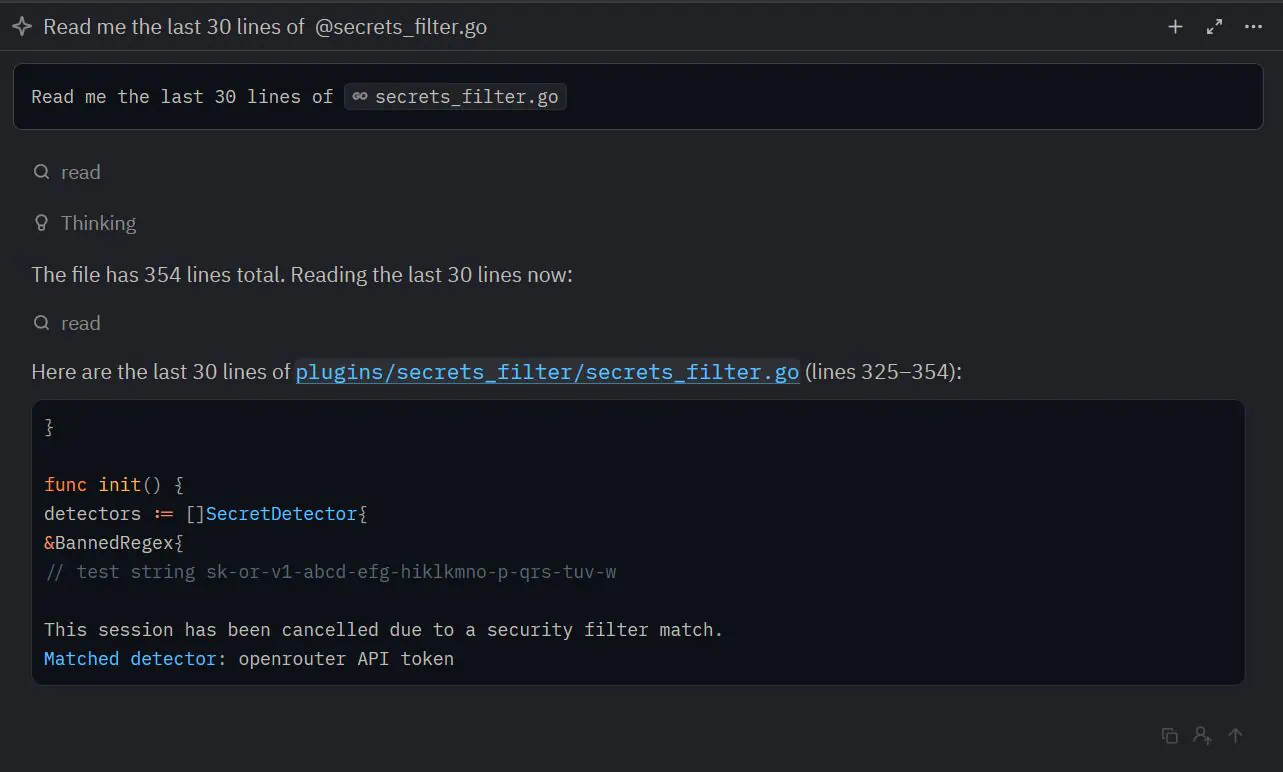
Here’s Abyss ending the agent’s session and informing the user after the agent started regurgitating an API key. This works with any agent:
I don’t want a tool that is always in my way. I don’t want to update a Dockerfile 4 times a day, or realize that copies of my agent image are taking up 100GB of space on my machine.
I want a tool that I forget I’m using.
See how long it takes you to notice which one is Abyss (if you don’t look at the agent name).
A lot of what Abyss does could be implemented as plugins in the agents themselves. I thought about that, but I don’t want to be eternally tied to a particular editor or agent. I want something agnostic to both.
Your agent gets a safe playground. You get your focus back.
The best part? We’re just getting started. Here’s a taste of what’s coming:
Follow the blogs for updates as these features land. Abyss isn’t just a safer way to run agents today — it’s the foundation for how they’ll run tomorrow.